World Economic Forum Global Risks 2025 - A world of growing divisions
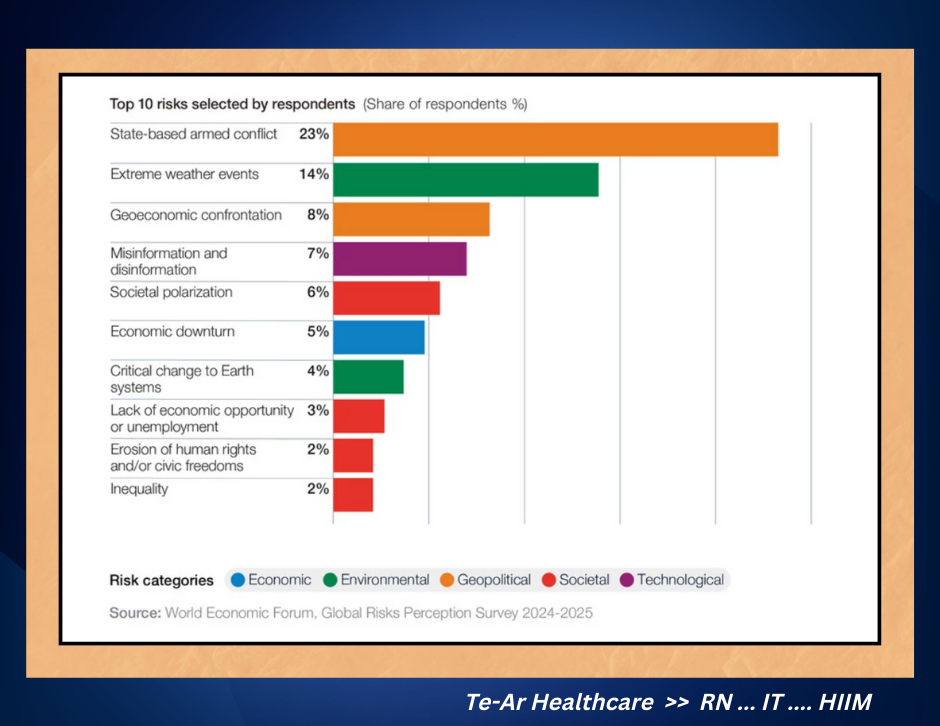
The World Economic Forum has released its Global Risks Report for 2025. Some trends continue from last year, with new risks moving to the top of the list.
Major risks
The report identifies growing geopolitical tensions, environmental challenges, and technological uncertainties that present major risks to stability and progress for people around the world. Through extensive analysis, including input from business, government, and academic leaders, the World Economic Forum has identified the top 10 risks for the world across three timeframes: short-term/immediate (2025), short-to-medium term (2027), and long-term (2035). Overall, the report shows how humanity's perceptions have darkened when it comes to conflict.
Armed conflict — the number one challenge
Topping the WEF Global Risks Report 2025 is "state-based armed conflict." This means more people are suffering terribly from injuries and untreated illnesses in war-torn areas. Healthcare workers are the first to respond to these events, often putting themselves in harm's way.
Over the next several years, climate-related threats are also a major challenge for global populations. Extreme weather events are anticipated to become even more of a concern — extreme heat or cold resulting in floods, drought, tornadoes, hurricanes, typhoons, and pollution affecting everyday health conditions.
Effect on healthcare workers
These risks are putting significant additional strain on already overburdened healthcare systems and staff, and potentially damaging global health, with direct and indirect consequences for healthcare workers everywhere. Nurses — always on the front line — are subjected to additional strain on already overburdened healthcare systems. Their clinical expertise, communication, and leadership skills make them indispensable in times of crisis, and alongside physical care, nurses and healthcare workers provide mental and emotional support in times of disaster.
Why it is important
- What actions should nations and governments take at this time?
- Invest in healthcare workers — education, preparation, and embracing technology
- This is a time for international collaboration — table differences and communicate as if life depends on it, because it does
The WEF Global Risks Report for 2025 is available on their website and includes the detailed report as well as a Key Findings summary.