What Healthcare Consultants Do: Roles and Benefits
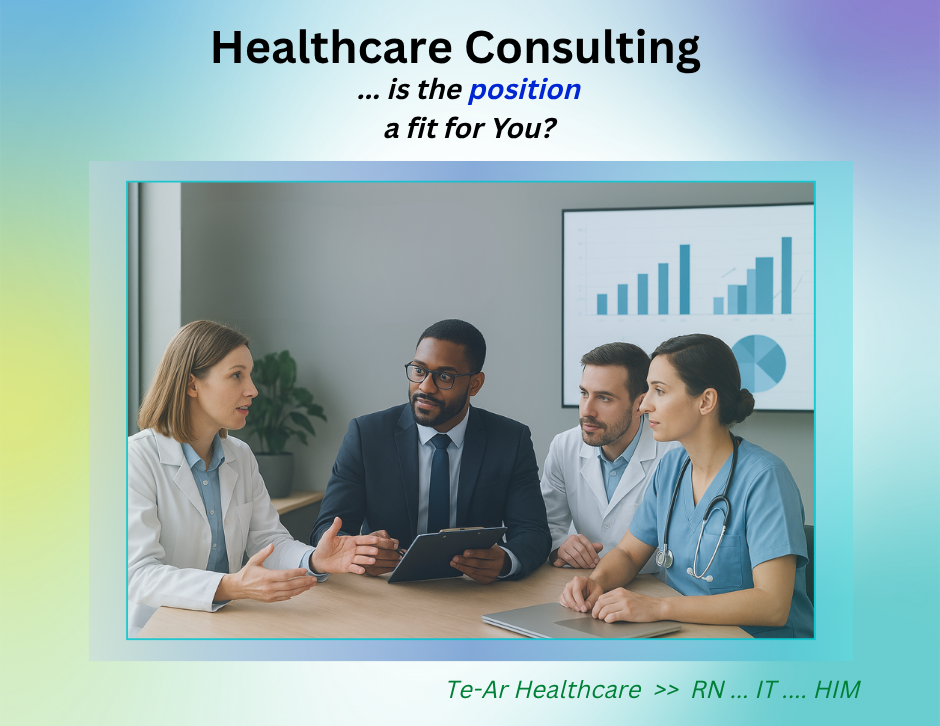
The opportunity for healthcare consulting exists across multiple healthcare domains; this is a valuable career path for nurses, IT specialists, Health Information Leaders, informaticists, and others. The healthcare consultant is a strategic partner with organizations, providers, payers, and governance bodies.
What exactly is healthcare consulting?
Healthcare consulting is a specialized service where experts with advanced knowledge in healthcare provide guidance, strategic advice, and project leadership to healthcare organizations. Consultants support healthcare providers by analyzing data, offering solutions and guidance, and helping organizations adapt to the industry's complexities. Their areas of expertise include technology implementation and updates, regulatory compliance, operations, business development, and more.
Healthcare consultants can work as independent advisors or become temporary members of an organization's team to lead specific initiatives. They typically serve a wide range of clients — providers (hospitals, physicians), pharmaceutical companies, insurers, and payers — offering tailored solutions to address unique challenges. These roles create opportunities for nurses, IT specialists, Health Information Leaders, informaticists, and others.
Role of healthcare consultants
Healthcare consultants play a vital role in advising healthcare stakeholders through the complexities of the industry. Along with solving acute and long-term problems, they leverage their expertise to improve efficiency, ensure regulatory compliance, promote ethical practices, and help organizations stay focused on delivering high-quality patient care — always centered on serving people and client needs.
Why healthcare consulting matters
1. Navigating the skills path. With the complex universe that healthcare occupies, it is difficult for healthcare entities to maintain staff with the competencies necessary to meet a continuously evolving range of challenges. Healthcare consultants have the specialized knowledge and skills to fill this gap.
2. Principles for regulations. The healthcare industry is highly complex, rapidly evolving, and heavily regulated — including EMRs, EHRs, digital health tools, and artificial intelligence. Healthcare consultants bring the expertise needed to navigate these technologies and regulatory frameworks with efficiency, consistency, and transparency.
3. Healthcare AI implementation. As the need for innovation intensifies, organizations must stay competitive and adopt new methods of service delivery. Healthcare consultants guide organizations through innovative initiatives, from strategy development to implementation — for example, helping a hospital evaluate its patient management system and implement an AI-driven interface.
The growing influence of digital marketing in healthcare consulting
While marketing is generally not a core area of expertise for healthcare consultants — particularly in clinical and IT-focused roles — consultants should not overlook the growing influence of digital marketing and social media in healthcare. Understanding how healthcare organizations communicate with patients and the public through digital channels is increasingly important for consultants who guide organizations in a competitive, patient-centered marketplace.
My focus at TE-AR Healthcare Consulting
The value I bring to healthcare consulting stems from my ability to integrate nursing expertise, clinical insight, and healthcare business acumen to effectively support and lead cross-functional teams in achieving operational and patient care excellence. While I don't claim to be an AI expert, I recognize its transformative potential in healthcare and am continually learning to help organizations navigate this transition effectively.
The opportunity for consulting exists across multiple domains within healthcare — a valuable career path for nurses, IT specialists, Health Information Leaders, informaticists, and others still being defined.