Sustaining the Global Nursing Workforce: Trends and Challenges
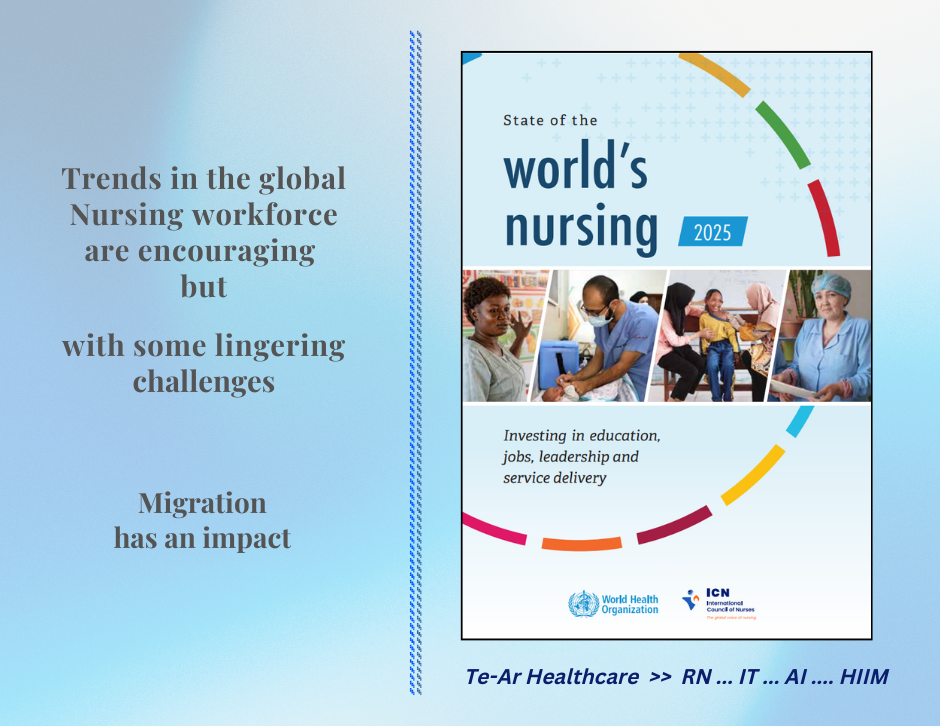
The nursing workforce has increased globally, however low-income countries continue to suffer from migration. A strategic examination of workforce distribution, policy gaps, and international accountability is required.
The World Health Organization (WHO) published a report in 2020 addressing the global healthcare workforce, "The State of the World's Nursing 2020: Investing in Education, Jobs and Leadership," identifying a global nursing shortage of 6.2 million.
An updated report released by WHO on International Nurses Day 2025 provides a comprehensive, up-to-date analysis of the nursing workforce at global, regional, and country levels. The evidence indicates progress in reducing the shortage, from 6.2 million in 2020 to 5.8 million in 2023, with a projected decline to 4.1 million by 2030. The progress is encouraging; however, aggregate data can obscure meaningful findings and requires a deeper dive.
Trends in the global healthcare workforce
1. Number of nurse graduates. Low-income countries have more nurse graduates but also more migration; high-income countries have fewer graduates but less migration. Overall, more nurses have graduated, but a deeper look reveals where new graduates end up: low-income countries are increasing graduate numbers faster than high-income countries, yet those nurses are migrating away from their home countries — most often toward high-income countries — leaving a potential gap in healthcare access at home. We must be cognizant of ethical international recruitment policies; workforce gains in low-income countries risk becoming a migration force toward high-income countries.
2. Age demographics and retirement. The global nursing workforce is relatively young: 33% of nurses are under 35, and 19% are 55 or older. Nurses aged 55+ are expected to retire within the next decade, and retirements are expected to outpace new entrants, mostly in high-income countries — raising further concerns about the nursing shortage, including fewer experienced nurses available to lead, educate, and mentor early-career nurses.
3. Workplace violence. Higher rates of violence in healthcare settings are leading to psychological trauma and burnout, with inconsistent reporting and enforcement standards and insufficient regulatory protections for nurses. Research from the National Institute for Occupational Safety and Health reports that incidents often go underreported, masking the true scope of the problem. Addressing workplace violence requires more than individual resilience training — it demands organizational policies, staffing protection, and system-level accountability.
4. Burnout and unsafe staffing ratios. Fewer nurses in the workforce creates unsafe staffing ratios, overworked conditions, and burnout — and decreasing attrition is increasingly linked to burnout for the remaining workforce. We must focus not only on preventing burnout but on interventions that enhance and support nurse well-being, and all nurses are challenged to be mindful of colleagues showing signs of exhaustion or strain and respond with compassion.
Strategies for sustainability
- Redesign care delivery considering the impact of AI
- Fast-track pathways for second-career nurses
- Create reduced physical load roles for aging nurses to keep more nurses in the clinical workforce
- Invest in global nursing education infrastructure
The sustainability of the global nursing workforce is not a professional issue alone — it is a health system design issue, including the increasing corporatization of healthcare systems, where financial priorities may conflict with workforce sustainability. Nurses are a valuable and the largest component of the health and care workforce, and must be included in every aspect of the design and implementation of systems, processes, and care.
Data and quotes are from the WHO report "Nursing workforce grows, but inequities threaten global health goals," May 12, 2025.