Nursing Left Out: How a Federal Definition Change Could Impact the Workforce
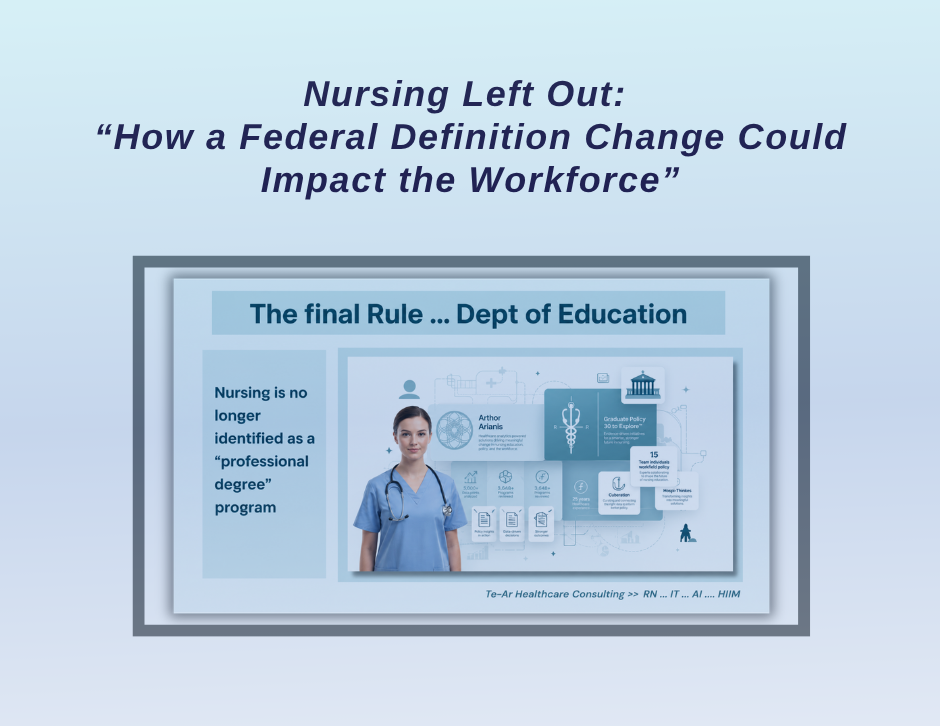
As new student loan rules take shape, nursing's omission raises questions about education access, workforce supply, and healthcare safety.
In an effort to balance the federal budget, the Trump Administration directed the Department of Education to tighten the federal student loan program under the "One Big Beautiful Bill Act" (OBBBA). The Department of Education has complied, finalized regulations, and phased out Grad PLUS loans for nurses.
Starting July 1, 2026:
- Students enrolled in graduate degree programs will be limited to a fixed annual loan cap of $20,500, with an aggregate limit of $100,000 for a program of study.
- Students enrolled in professional degree programs (Grad PLUS) will be permitted to borrow up to $50,000 per year, with an aggregate cap of $200,000 — but nursing is no longer included in this category, meaning nurses no longer qualify to receive student loans at this amount.
Previously, student loans scaled with program cost (effectively uncapped), meaning a student could borrow up to the full cost of attendance. With the new policy, the loan is capped at $100k — the student loan for nurses has moved from flexible, unlimited borrowing to a fixed cap amount.
Nursing impacted at all levels
The decision to exclude nursing as a professional degree is more than an insult to the nation's most trusted profession — it is a serious blow to the health of our nation.
- Excluding certain healthcare programs from the definition of a professional degree will likely exacerbate the ongoing shortage of healthcare professionals, specifically nurses.
- The new policy will likely restrict borrowers' ability to access federal student loans in amounts necessary to cover tuition.
- The restriction will likely prevent many qualified candidates from enrolling in or completing advanced programs.
Given the significant challenges facing the U.S. healthcare system, ensuring a pipeline of highly educated healthcare professionals is essential.
Why it matters
The change will impact hundreds of thousands of students — there are over 260,000 students currently enrolled in entry-level BSN programs and around 42,000 enrolled in Associate Degree in Nursing (ADN) programs, according to data from the American Nurses Association. One would expect these numbers to drop based on the financial status of students and working professionals.
With the new policy set to take effect July 1, 2026, reinstating nursing as a profession that qualifies for advanced graduate loans will be challenging. But nurses are not standing idle — they are gathering in Washington, D.C. on May 7, 2026 to communicate with Congress and leadership, and nursing organizations continue engaging with Congressional members to show the value of nurses and the damage from this policy change.
What can you do?
- Engage with professional organizations
- Communicate with our legislative representatives
- Remain diligent
Sources: American Nurses Association, American Organization for Nursing Leadership, American Hospital Association, and other professional organizations.